
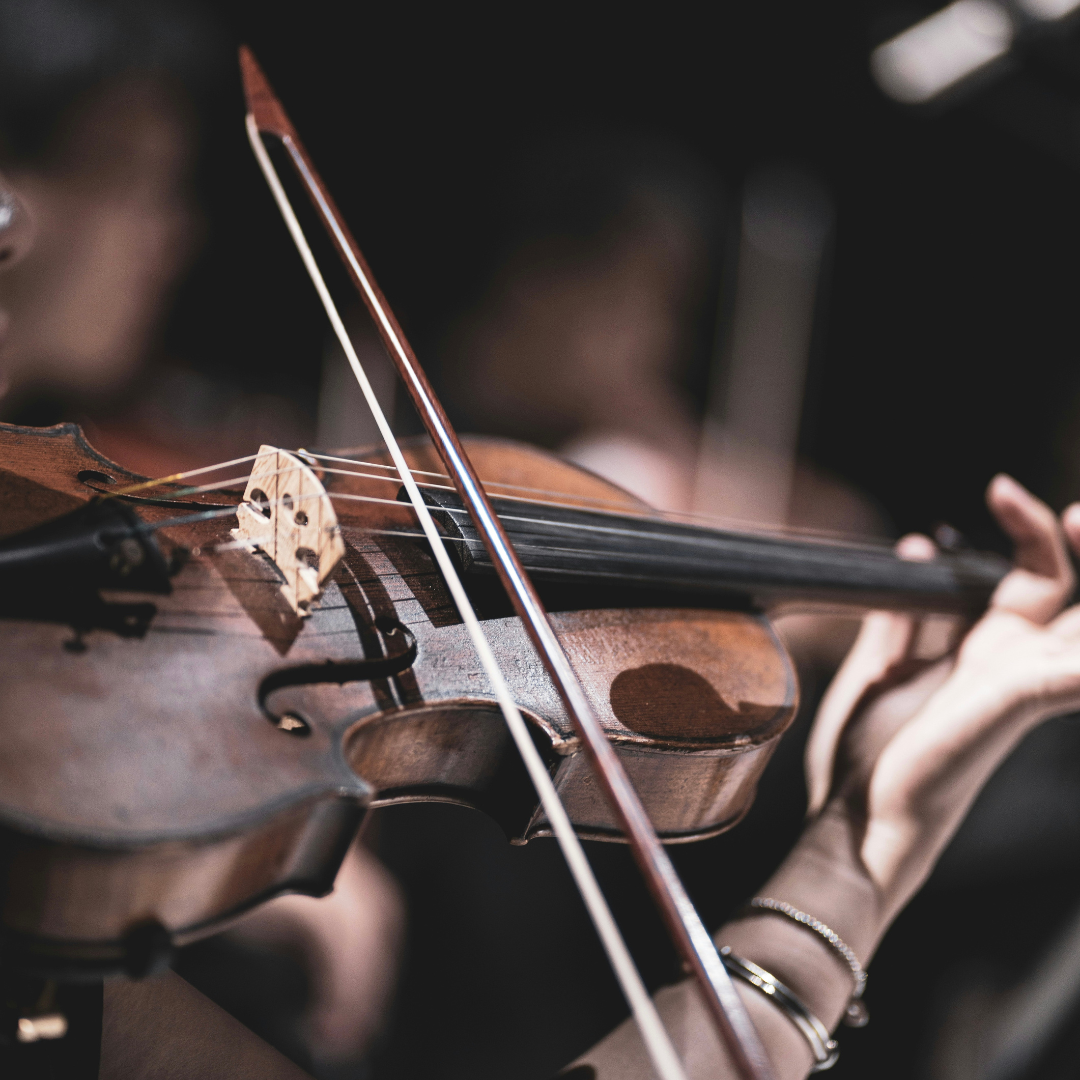
“Music expresses that which cannot be put into words and that which cannot remain silent”
– Victor Hugo –
Introduction
“A picture is worth a thousand words.” A very old and true statement. A single image can provoke a host of thoughts, feelings, and interpretations, especially as we try to relate it to ourselves. It says so much because of its subjective nature. While what we’re all seeing is objectively the same (perhaps a young lady sitting on a bunch with an umbrella) the meaning behind it is something different to each of us.
Music is very similar in this way. We all hear the same song or melody, but we internalize it and make it our own. Though we all might agree that a song has a sad or happy melody, how it affects us is based on our personal experiences.
One might say “Yes, of course, but that is the case for all art! It’s meant to be subjective.” They would be correct. So what makes music different? Music, in particular, presents an incredibly blank slate for us. It’s the least objective art form because there is nothing to see.
The biggest difference between a picture and music? Music is worth a thousand pictures.
the oldest story-Telling Medium
In J.R.R. Tolkein’s, The Silmarillion, a song created Middle Earth. Similarly, in C.S. Lewis’ The Chronicles of Narnia, the world of Narnia itself came into being when the great lion, Aslan, sang. This beautifully illustrates how music resonates through the universe itself. It is in the hearts of men. We’ve always had it with us. Before books, theater, paintings, and film, there was music. Music was the first medium in which we could tell a story without explicitly using words. Music manages to pull something out of our innermost being when words are not enough.
By nature, music is driven by emotion. A melody with no words is capable of evoking strong emotions. But when we add words to music, there is a compounding effect where the melody helps the words express emotions and layers of meaning they cannot convey on their own.
Music in mass
Nowadays, we have multiple mediums of storytelling. The one to rule them all though? Music. It dominates the entertainment industry by sheer mass. Why is that? Most songs are relatively short, making them more easily produced than a book or movie. This means that everyone, everywhere, of all demographics, can produce it quickly.
The consumption time is shorter too. Music gives us an emotional arc of a complete story in a matter of a minutes, as opposed to investing several hours or days to get that complete arc.
Music literally infiltrates every part of our lives. Can you imagine a grocery store, restaurant, or party without music playing? We can play it whenever we want. It requires minimal attention from us to enjoy it.
To add to all of this, we know that art and stories shape culture. Messages are being constantly fed to us through them. Because of its mass, music dominates this aspect as well. When music plays all of the time and in just about every context, we can find ourselves being shaped subconsciously by its messaging. Take a moment to think about how music has shaped us culturally through genres like Country & Pop. Think about how it’s shaped you.
music and memory
Music seems to be the most nostalgic art form. Hearing a particular song or genre of music unlocks core memories and feelings for anyone that has associated it with having a significant role in their past. We tend to cling to music through critical moments in our lives, such as puberty or working through grief. It’s like a time capsule. When we listen to it, critical feelings and thoughts from those times come back easily. It’s an example of how music can become deeply interwoven into our minds and connect with our personal experiences.
While a book or movie may be nostalgic, I think they don’t tend to be nearly as much because they are more objective forms of storytelling. We may relate to books and movies and have certain personal interpretations of the story, but the individualistic nature of a song played on one’s car stereo or in one’s headphones means we have stronger emotional connection to it. It literally becomes part of the soundtrack of our lives. We put our own experiences into the song and give the song a meaning.
conclusion
While there are no clear visuals that accompany music, that means we get visualize for ourselves what the song represents. We create our own pictures and colors that have symbolic meaning for us. No one gets to tell us what the song means because we listen to it on an individual level. While a picture is worth a thousands words that we could use to interpret what it means, a song is worth a thousand pictures that our minds conjure up to give it meaning.

Leave a Reply